






Born in Tacoma, Made in Berlin — with Hal Warren
Welcome to Made in Berlin, our blog series celebrating the diverse stories of our international student community.
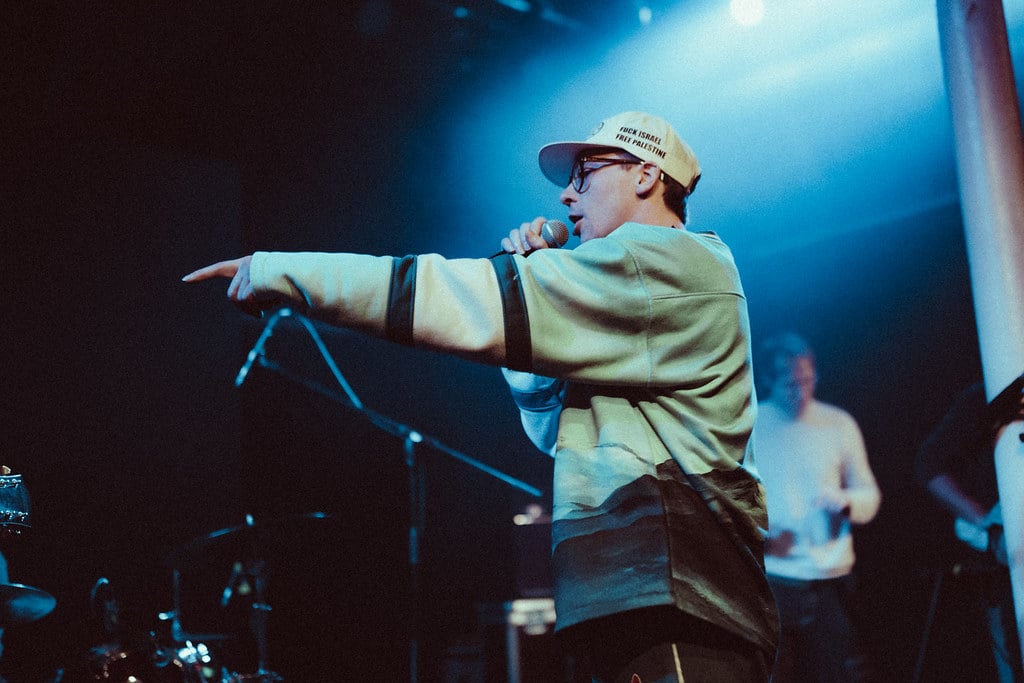
Today, we caught up with Berlin-based rapper Hal Warren to talk about community, individuality, and the living, breathing entity we call Berlin.
Tell us about yourself, who are you?
My name is Hal Warren, I’m an MC and hip hop producer from Tacoma, Washington, based in Berlin for a little over a year. I’ve been rapping and writing rhymes for about 10 years. I graduated from Tacoma’s School Of The Arts in 2020 before studying Music and German at Pacific Lutheran University until 2024.
During my junior year, I did a yearlong German Language program in Berlin and completely fell in love with the city, and I recognized many ways that I could create opportunities for myself here.
Why your chosen course?
This program appealed to me because of its freedom. I’ve always been a good student who’s skilled at following direction, but for my master’s I wanted to be the one in charge, responsible for seeing my own ideas through. It pushed me to trust my creative instincts and build real dialogue (academic, musical, and community-based) beyond just working alone in my bedroom. I expected more technical focus in the modules than was actually offered, but the program gave me access to endless tutorials and studio time, including a live audio engineering course and recording in BIMM’s Studio (or ‘the spaceship’ as I like to call it). Experiences that will directly help me find work post-graduation.
Ultimately, it’s on the student to take initiative and follow through, which mirrors how the music industry actually works. No one holds your hand. I’m leaving more independent, confident, creative, and self-aware, both as a person and a musician. Huge thanks to my mentor Sjoerd, who changed my life and helped me through major creative and personal breakthroughs, as well as Laura Gertken and BIMM’s student wellbeing team — the program supported me holistically, not just academically.
Being in a space where I have been encouraged to think for myself and encouraged to be wildly creative, but then also pushed to do the work to make those wild creative ideas come to life. That’s one thing this program did really well, allowing me to show up authentically. There is an understanding here that we’re human beings, we’re complex, we have many sides, and we don’t have to hide that.
What is your impression of Berlin as a project?
I don’t really see Berlin as a “project”. To me it’s more of a living, breathing organism.
I just finished my latest album, Rhythm of a Living Thing, which reflects that same cyclical nature: expansion and compression, like breathing, a heartbeat, or the sun rising and setting. Berlin moves in that same wave — fast tempo, slow tempo, peaks and valleys — and that rhythm has shaped how I make music.
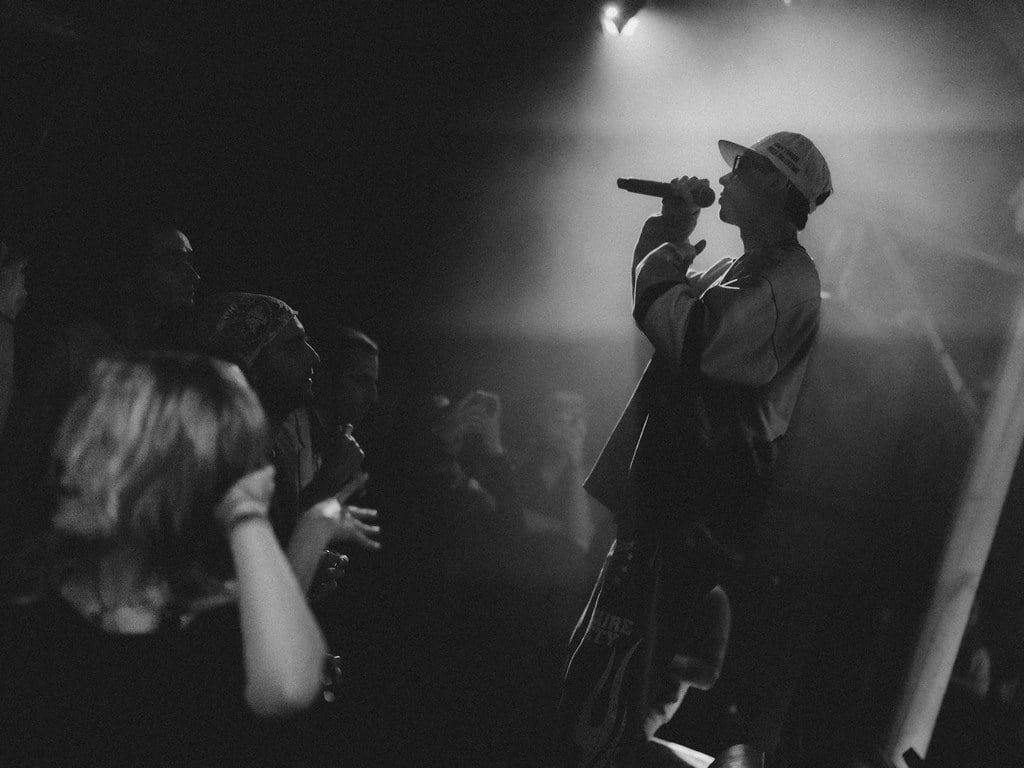
The real challenge Berlin presents is learning how to slow down and find peace with being alone with myself, and peace in building the life I actually want — because ultimately, this is a city of dreamers. Everyone here is chasing something, whether that’s changing their life or throwing it away, and it doesn’t really matter — you can come here and be whoever you want, do whatever you want. That total freedom is also a challenge in itself; the complete openness and lack of boundaries can be a little too much sometimes, even for me.
But I’m not here to judge — I’m part of this vibrant, expansive city because of that same nature. I think everyone who comes here has to figure out what that freedom means for them. Berlin is a beautiful place to find your own individuality, eventually make peace with it, and embrace it — so you can share it and become a fully expressive living being. I think that’s what we’re all ultimately trying to do.
How does Berlin’s music scene differ from that of your home?
Coming from Tacoma to Berlin was a huge transition. Tacoma has a vibrant, hardworking music scene, and I was lucky to come up through a hip hop collective called The 52, connected to the freestyle rap scene Grit City Cipher — we’re all tightly connected.
At around 250,000 people, Tacoma is small enough that you know where to find people, and big enough to know how to stay out of the way. Because of that, you see the same people again and again; you grow with them, and you get to witness each other’s journeys up close, which means your own journey is being witnessed too. Coming from that tightly connected, family-feeling hometown to a city of almost 4 million people in Berlin was a big change.
Berlin’s scene moves faster, with more happening all the time, but also more people competing for those same opportunities — whereas Tacoma’s tempo is slower, with a smaller group going after them. I think what makes any scene function well is when people don’t feel insecure about helping someone else get an opportunity, like it’s being taken away from them — there’s plenty to go around.
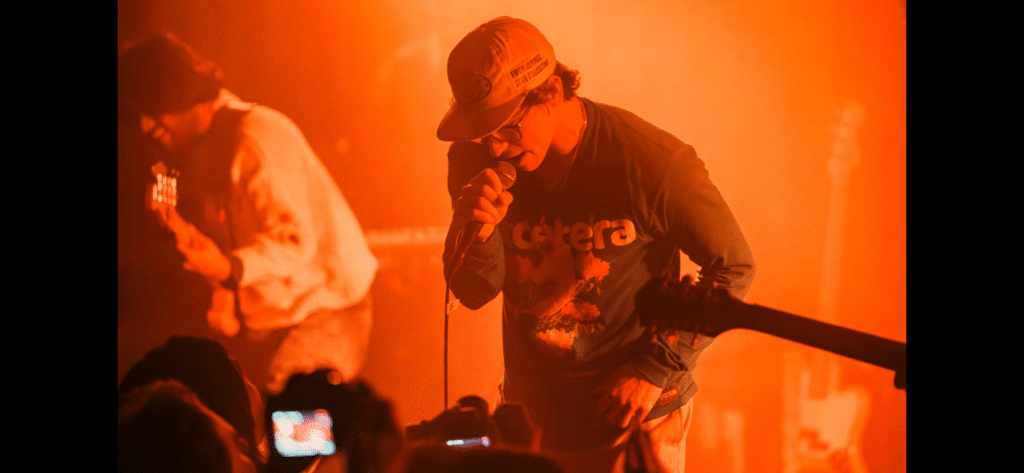
That’s a mindset Tacoma taught me: you can help others and be helped without it meaning less for you. I think Berlin could use more of that, and honestly, people here are generally willing to help, but some are chasing opportunities from more of a scarcity mindset, working with more haste than back home. That’s made it really valuable to slow down, be intentional, and make decisions based on my values, and to keep people around me who share them.
Tacoma taught me loyalty, selflessness, and mentorship — values I saw people back home genuinely living through hip hop. Carrying that with me gives me steady ground, even when I’m alone at a show or out in the city — it’s like I’ve got an army of people from home standing behind me saying “go for it, you got this.” I’ve been lucky to find and build a similar familial feeling here in Berlin too, especially with Oleek, a hip hop jazz project I am a part of, has been one of the greatest privileges so far.
Who in the industry is inspiring you at the moment?
First and foremost, my homies and closest creatives inspire me most — Oleek, my hometown ’52 Collective and the Grit City Cypher, are always working hard and were constantly pushing each other to the next level, my mentor and producer Tryfe who I owe so much too, and Nómadas BRL, the Spanish-speaking hip hop collective here in Berlin — they’re family, and I’m a student of every emcee there. Parose, a good friend and frequent collaborator, is one of the hardest-working independent artists in the city. Definitely check him out.
On the industry side, I’ve got my eyes on La Reezy — a 21-year-old from New Orleans with a positive message, real talent, and a documentation style that sets the standard for young artists, building an organic following similar to La Russell, whose journey I’ve also enjoyed watching. Conductor Williams is another one — a former train conductor turned Grammy-winning producer (Leon Thomas, Westside Gunn) with one of the best process-documentation styles on social media, specifically YouTube. And Die P, an Angolan rapper from Bonn, is one of the best MCs in the world and someone I really look up to.
Finally, my family and those I see on a daily and weekly basis are the ones who hold me down and support me the most. I am really grateful to have made it through the MA, to have such a beautiful circle of people in my life, and I’m so grateful that I have the opportunity to continue building my life here.
Thinking about studying in Berlin?
Visit us at an Open Day to chat with lecturers, meet current students, and experience BIMM Berlin firsthand.